
AI Won't Fix Your CX Strategy. It Will Amplify It
From chatbots to intelligent decision systems, why your CX foundation matters more than your AI tools

Confession: When I first got into CX, I genuinely thought it meant “the team that answers angry emails.”
I’m not proud of that. But I suspect I’m not alone.
Over the years, I’ve come to realise that Customer Experience is so much bigger than support tickets, success metrics, or NPS scores. It’s the entire feeling a customer has every time they interact with your brand — from the first ad they scroll past to the third time they email your support team about the same problem (we’ve all been there).
And right now? We’re in the middle of the biggest transformation this industry has ever seen.
So let’s talk about it.
🕰️ A Brief History of CX (Bear With Me. This Part Actually Matters).
To understand where we're going, we need to understand how we got here. Because AI doesn't create a new foundation — it amplifies the one that already exists.
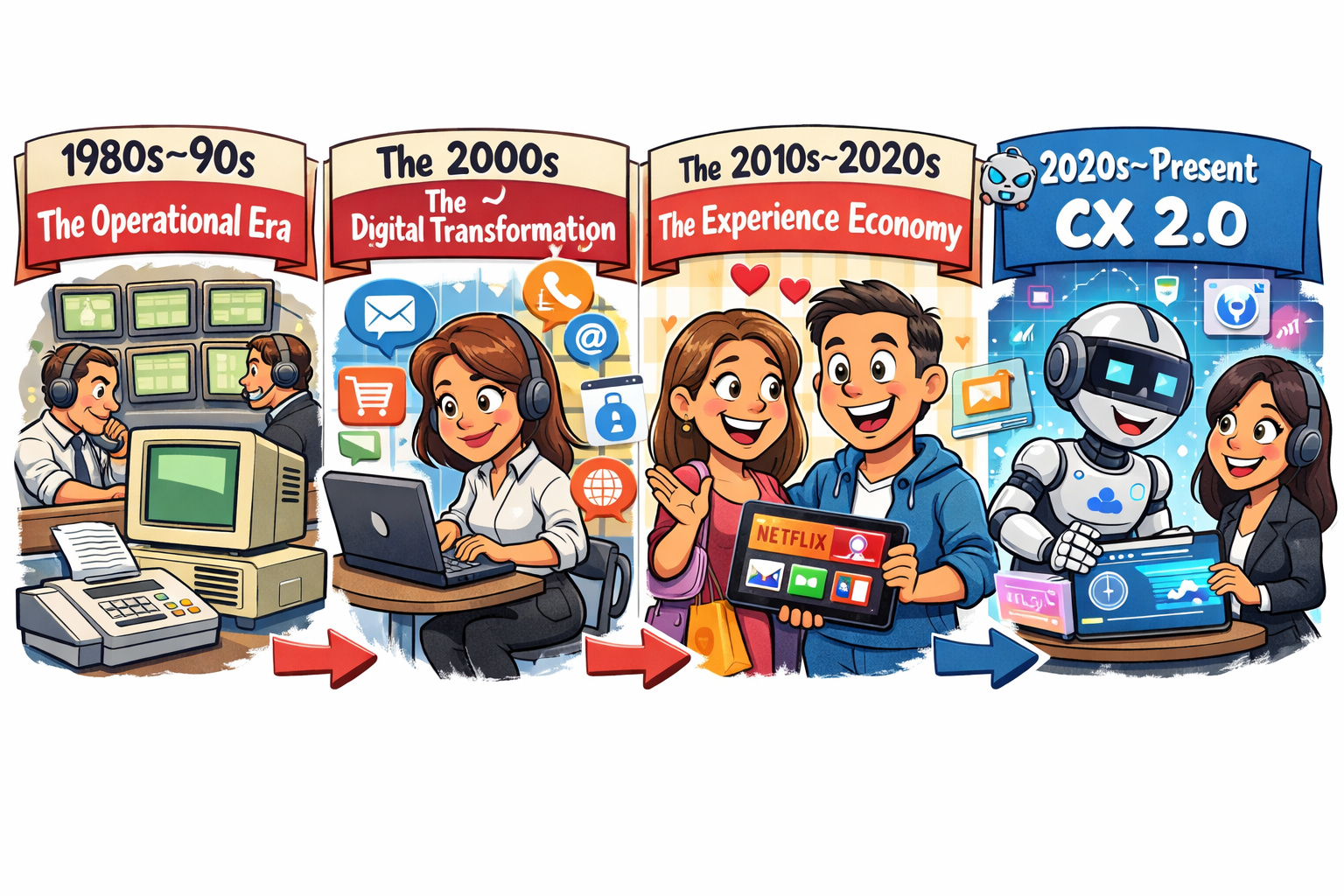
📠 The 1980s–90s: Efficiency First. Early CX was basically a stopwatch exercise. How fast can we answer the phone? How quickly can we close a ticket? Metrics like wait times, handle times, and first-contact resolution (FCR) ruled the day. The goal was managing operational service efficiently, not crafting an experience.
🌐 The 2000s: Digital Arrives (And Things Get Interesting). The internet changed everything. Suddenly, customers had options to contact with businesses via email, websites, Social media, Live chat, e-commerce and businesses had to follow them. This era gave us customer journey mapping and the Net Promoter Score (NPS). For the first time, companies started asking: What does our customer actually go through? A shift from service management to experience management.
📱 The 2010s–2020s: Welcome to the Experience Economy. This is where CX really grew up. Amazon taught us that one-click ordering could become a standard expectation. Netflix taught us that a personalised homepage is table stakes. Spotify taught us that a platform that knows your mood feels like magic. Data-driven, personalised experiences weren’t a competitive advantage anymore; they were the minimum bar.
🤖 2020s–Present: The AI Era CX 2.0. And here we are. Real-time insights. Emotional analysis. Predictive, proactive service. The platforms that once helped businesses respond to customers are now helping them anticipate customers. The shift from reactive to predictive is genuinely massive.
🚀 So What’s Actually Changed?
Here’s the thing about AI in CX: it’s not just making old things faster. It’s rewriting what’s possible.
We went from basic FAQ bots (remember those?) to AI copilots that help your human agents respond smarter and faster, to fully autonomous AI agents that can resolve complex queries end-to-end. That’s not a small step. That’s a leap.
Customers today interact with brands on their phones, on mobiles, online, via social media, live chat, in store, sometimes all in the same week. Excellent customer experience now means a consistent, intelligent persona across every single one of those touchpoints. AI is what makes that coherence scalable.
Before AI, businesses collected data. Now, AI and machine learning evaluate real-time customer data, predict behaviour, and enable truly personalised approaches at a scale no human team could manage. The recommendation engine that knows you want oat milk before you’ve said a word? That’s CX intelligence at work.
The emotional connection layer of CX is something that doesn’t get talked about enough: the best CX isn’t just efficient, it’s empathetic. Businesses that create emotionally connected experiences see customers who feel genuinely understood and valued, and that drives loyalty in ways that no loyalty points programme ever could.
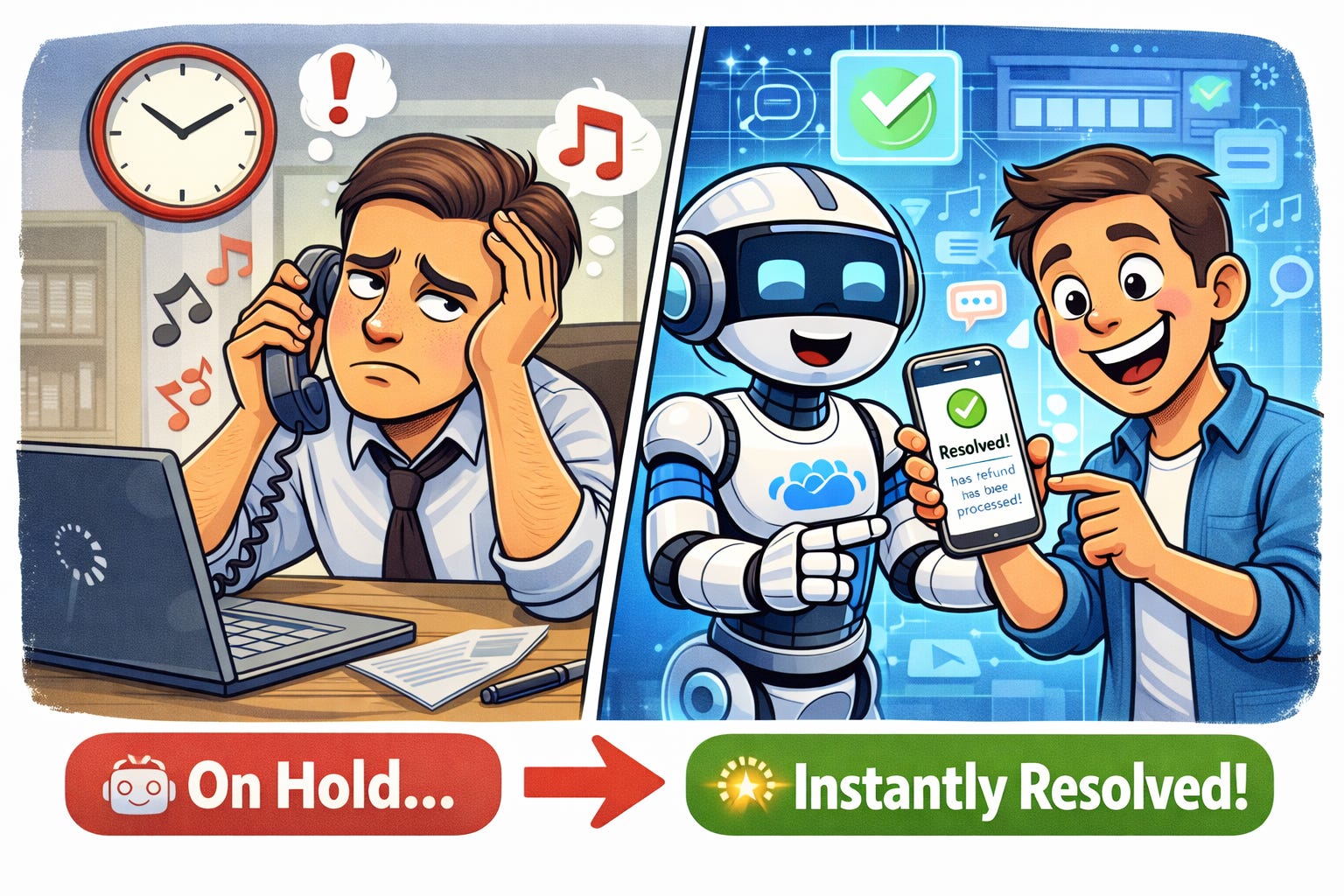
AI has moved fast. Faster than most CX strategies have kept up with. And that gap? That’s where things get messy.
Now the Fun Part: 🔮 What Does the Future Actually Look Like?
A few things on the horizon that genuinely excite me:
Journey Mapping 2.0: Gone are the static journey maps we used to build in workshops. AI now enables dynamic, personalised, predictive journey maps that update in real time based on how customers actually behave. That’s a completely different tool, one that requires a completely new way of tracking and evaluating customer behaviour, and honestly, a whole article on its own. Coming soon 😉.
Hyper-personalisation at scale: Not just “Hi [First Name]” in an email. We’re talking about omnichannel experiences built from unified customer profiles, where every interaction adapts to who you are and what you need right now. CDPs and modern data architecture platforms have never been more critical; the infrastructure finally matches the ambition.
The Metaverse layer (yes, really): Before you roll your eyes, think about the show Upload (premiered May 2020), where CX is used as a bridge between dimensions and each client has an “angel”, essentially a dedicated agent assigned to meet their every need. Sound familiar? This shows what agent-customer interaction could look like in a three-dimensional, immersive environment, which is genuinely fascinating. Personalised virtual spaces. Gamification. It’s not mainstream yet, but it’s coming, and CX will be there when it does.
💭 My Take
We are living in the most exciting era of customer experience has ever seen. The platforms that were once simple communication tools are becoming intelligent decision systems capable of anticipating needs, personalising at scale, and creating emotional connections that actually last.
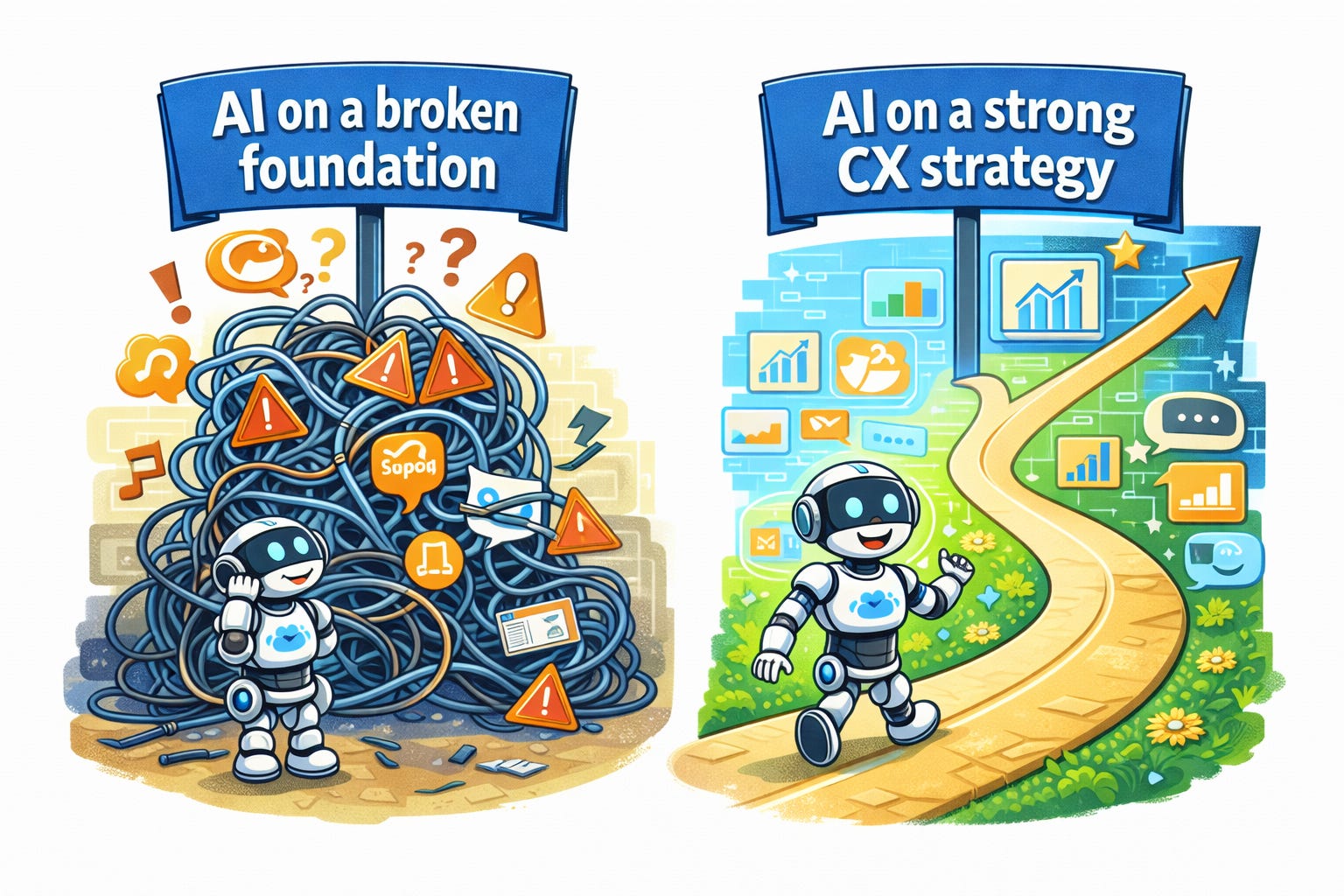
But the organisations that will truly win aren’t the ones who bolt AI onto a broken strategy. They’re the ones who build the right foundation, embed customer-centricity into how they’re governed and how they invest, and then let AI do what it does best.
The question isn’t whether to use AI in your CX stack. That ship has sailed.
The question is: what are you building it on top of?
See you next time 😉.
Great Start.. Looking forward to the upcoming episodes